
Honoring student-led inquiry at scale
How do we give students the room to explore, question, and imagine — while keeping a class of forty moving forward together?
Why Boomerang Projects
Boomerang Projects was built on a simple idea: the freedom that makes AP Seminar work is worth protecting, and the structure that protects it should support student thinking — not interrupt it.
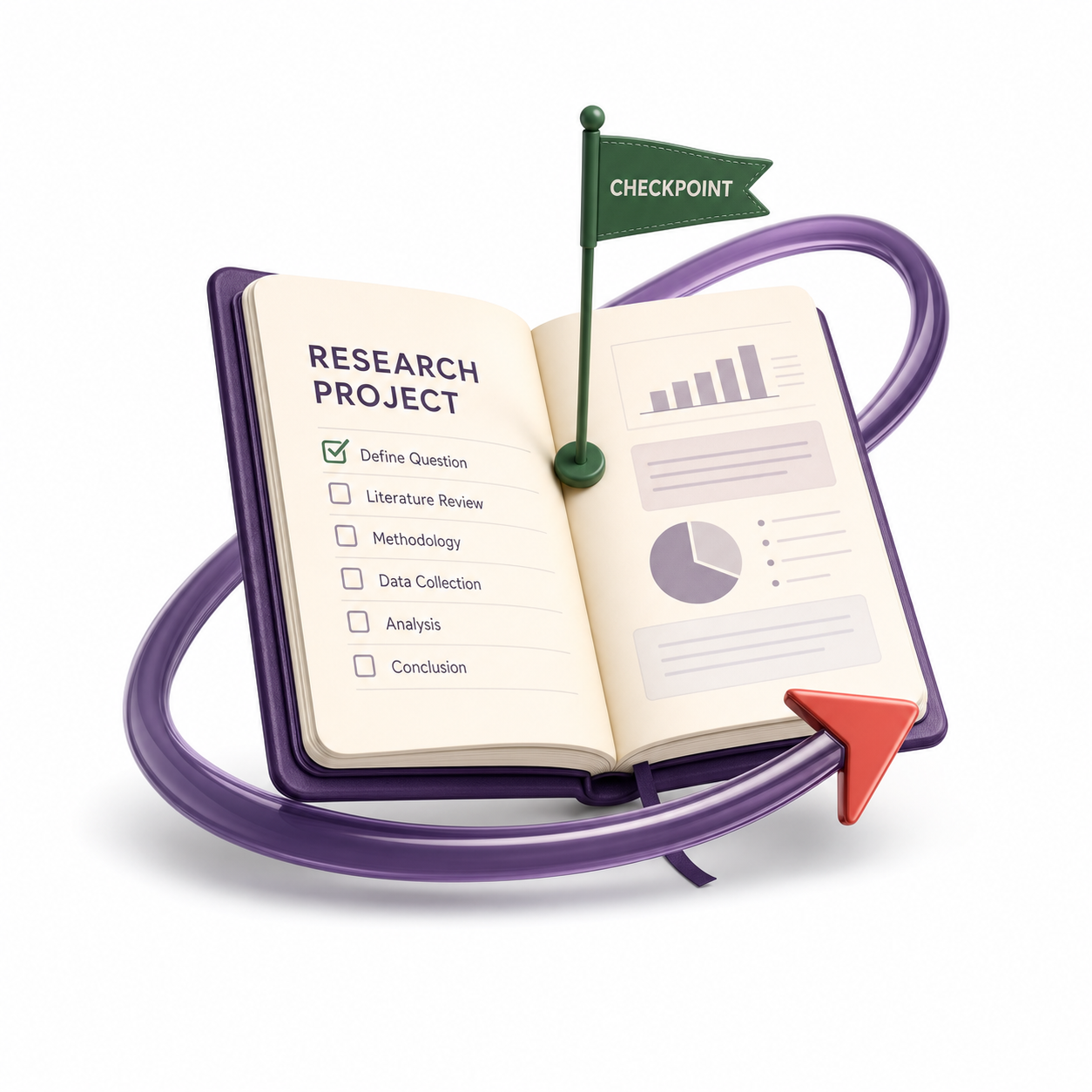
Students choose questions that matter to them. They evaluate evidence from many perspectives. They build arguments. They present findings to an audience. The course is structured around a single, powerful idea: that thinking should lead somewhere — toward solutions an engineer, a community, or a policymaker could actually implement.
That promise is also why the course is hard to manage. A class built on student freedom needs more support around it, not less.
Across professional AP Seminar communities and in everyday teacher-to-teacher conversation, the same questions kept coming up.
How do we give students the room to explore, question, and imagine — while keeping a class of forty moving forward together?
Some weeks the energy is high. Some weeks it isn’t. Teachers wanted ways to support students who are stalling without turning the workflow into surveillance.
Rubric language, RAVEN evaluation, citation formatting, sample structures — all of it exists, but it lives across the internet. Teachers wanted those resources in one place, available the moment a student needs them.
Student time on real research. Teacher time on real feedback. Less time spent reformatting documents, hunting for templates, and re-explaining the rubric.
Boomerang Projects is not designed around control. It is designed around trust, visibility, and professional judgment. Most AP Seminar students will rise to the challenge of student-led research when the structure around them is clear. When patterns appear, teachers need context for a human conversation rather than an automatic flag.
Many project management tools are built around tasks. Many learning platforms are built around grades. Boomerang Projects is built around thinking — the kind of thinking AP Seminar is supposed to produce.
The student dashboard exists to make the shape of the course knowable. The Reverse Timeline exists to turn a far-off deadline into next week’s work. The annotated bibliography exists to make source literacy a habit. The TMP planner exists to make collaboration visible — so a teacher can give credit where it’s earned and support where it’s needed. The teacher view exists to surface whole-class patterns, not to micromanage individual students.
None of it is built to replace teacher judgment. All of it is built to support it.
Inside the app
Every screen below is part of the live AP Seminar workflow inside Boomerang Projects. Most live in the student view. A few only appear when a teacher toggles in.
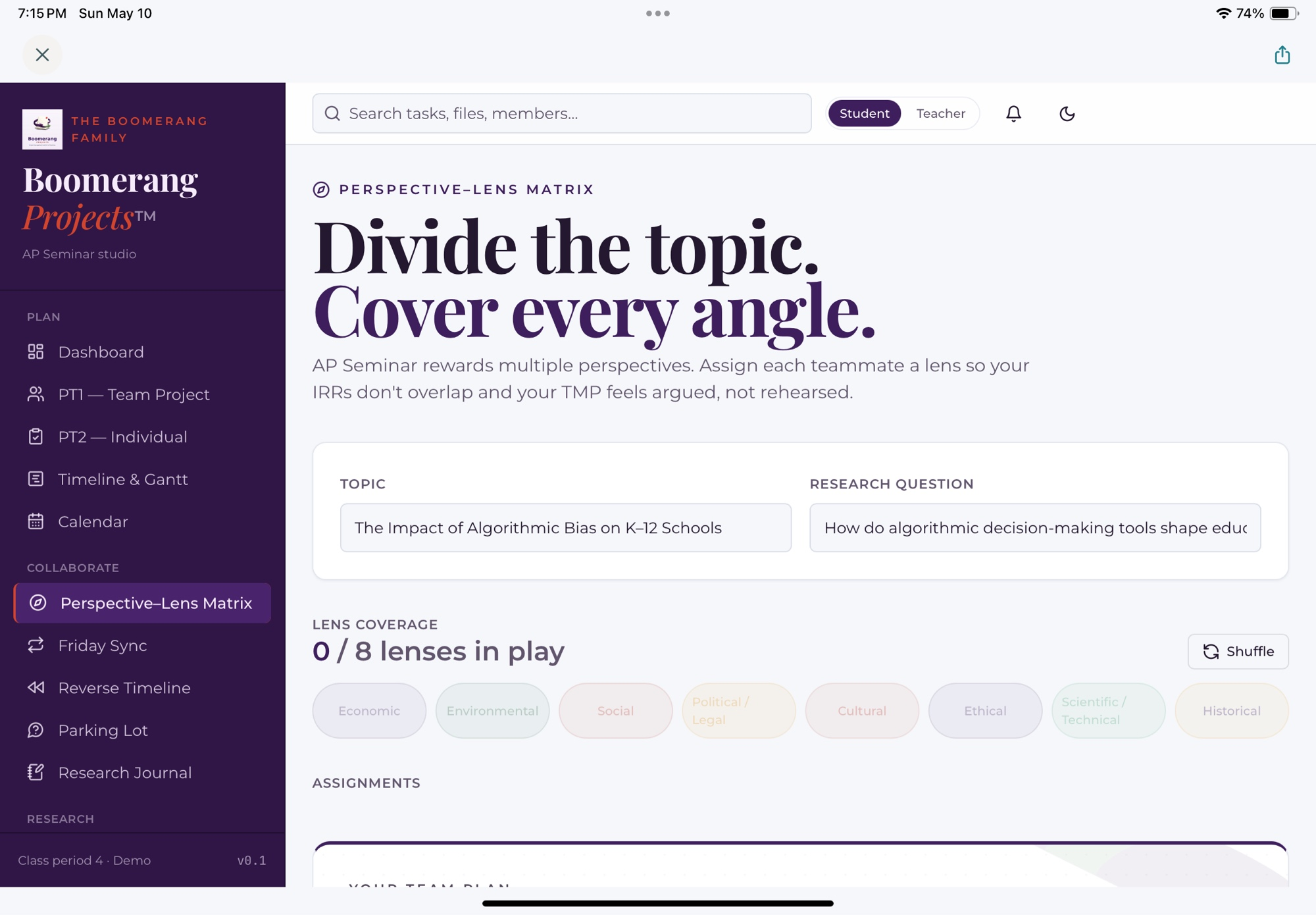
Student view · PT1 team setup
AP Seminar rewards multiple perspectives. Each teammate picks a lens — economic, environmental, ethical, political/legal, cultural, scientific/technical, historical, social — so the team’s IRRs don’t overlap and the TMP feels argued, not rehearsed.
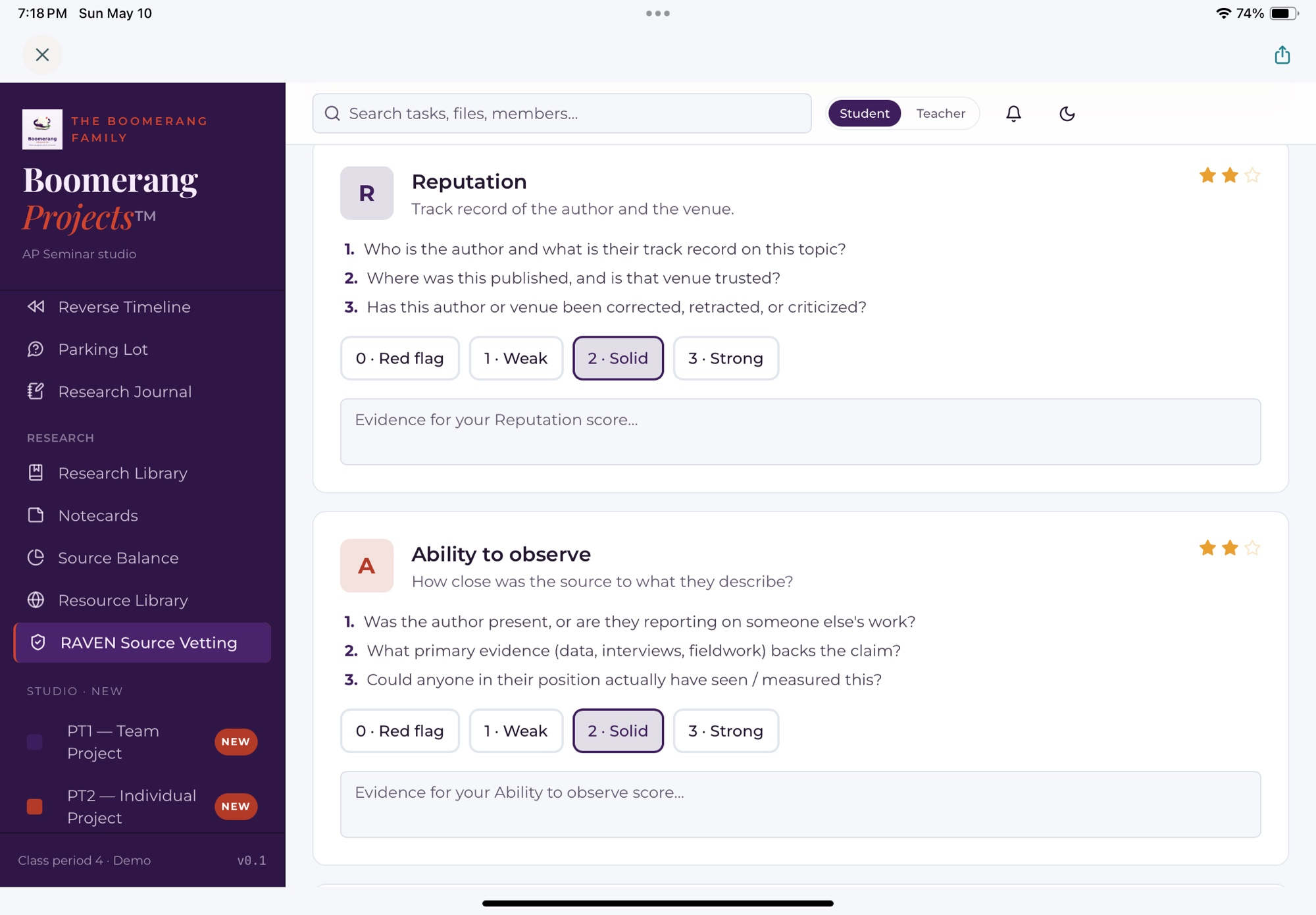
Student view · Source literacy
Source quality is a habit, not a hunch. Every source gets a four-step RAVEN score across Reputation, Ability to observe, Vested interest, Expertise, and Neutrality — with evidence fields next to each score, the way an AP reader would expect.
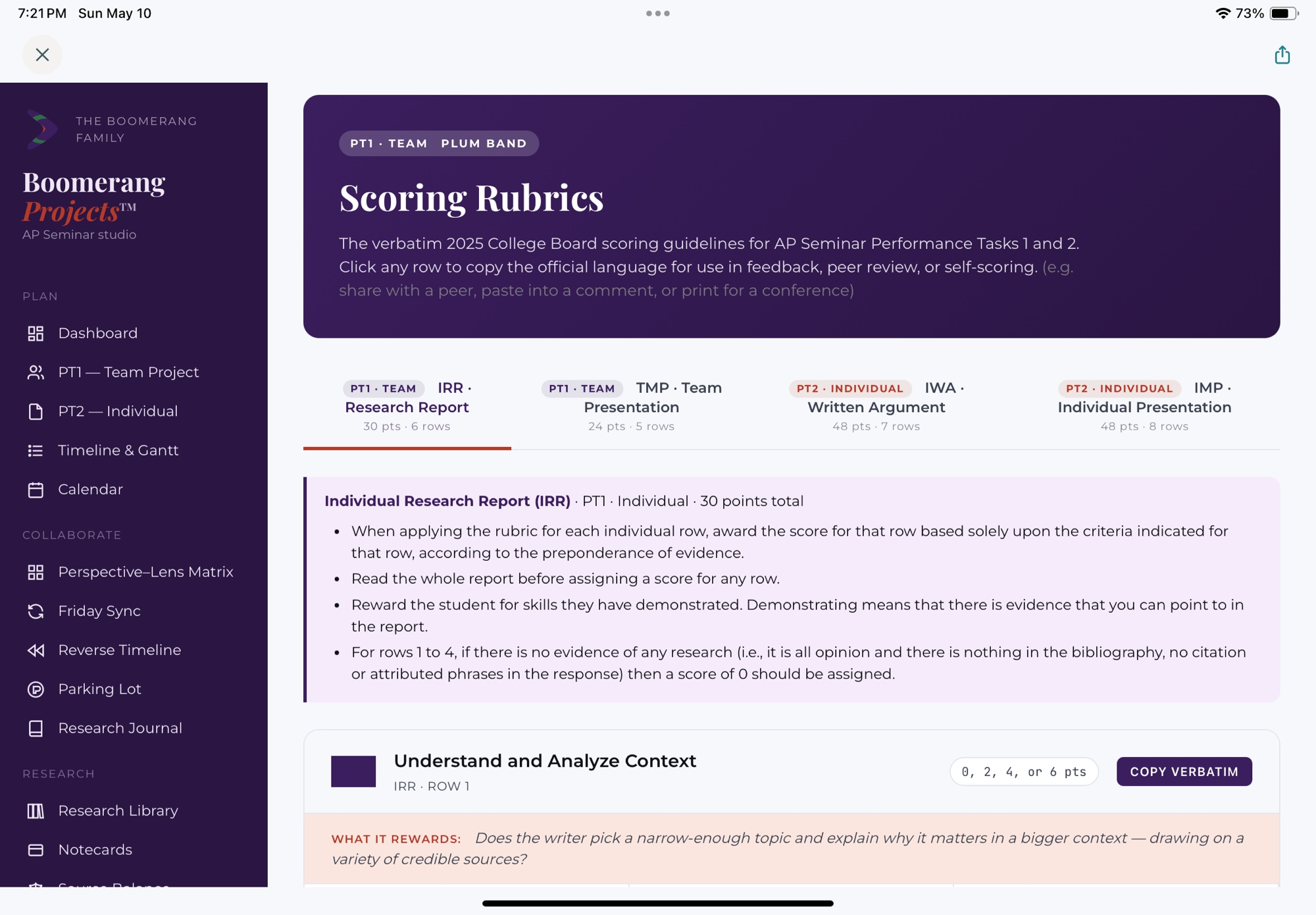
Student view · Rubric access
The 2025 College Board scoring guidelines for IRR, TMP, IWA, and IMP — word for word, row by row. One-click copy to share with a peer, paste into a comment, or print for a conference. No paraphrasing the rubric.
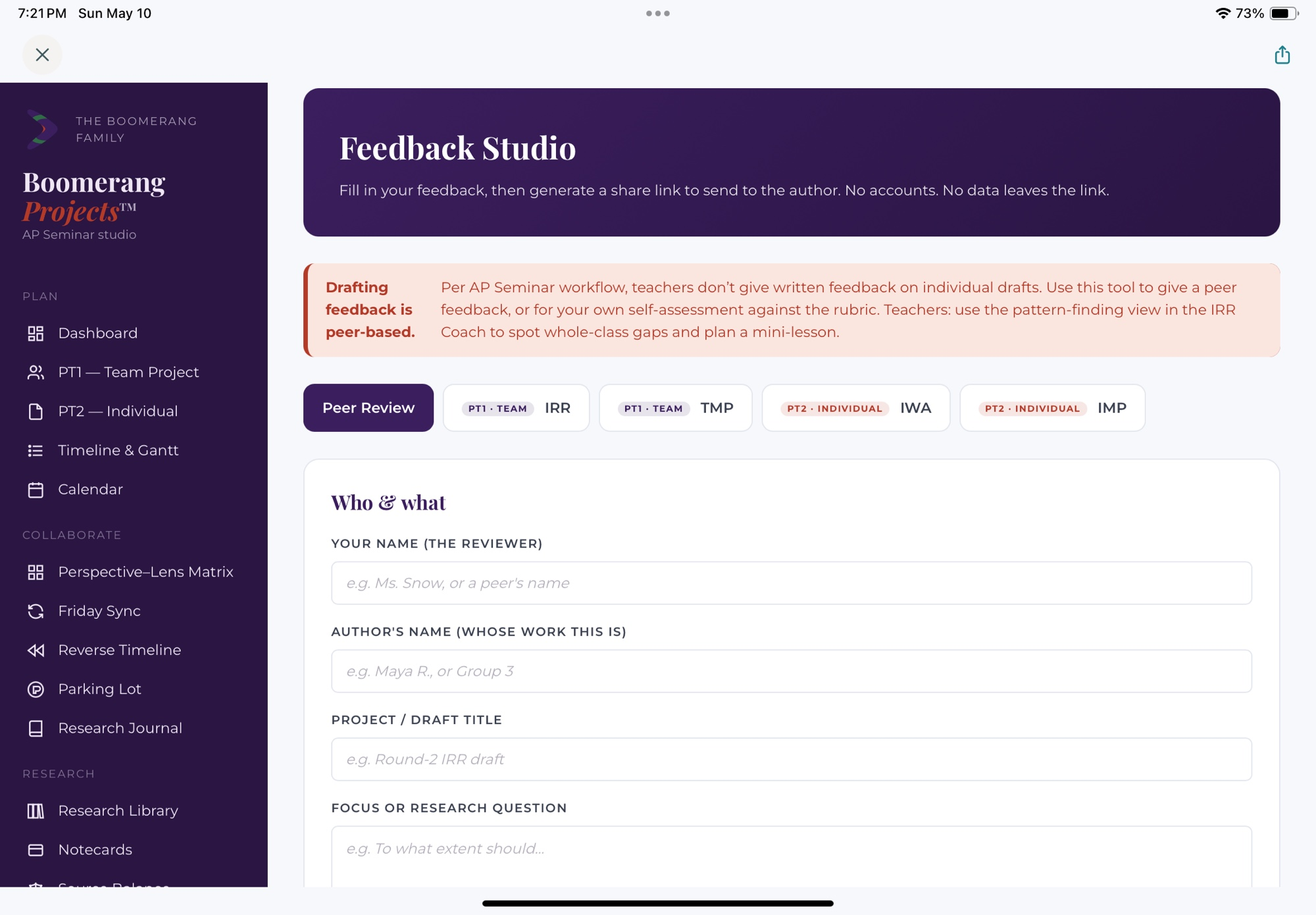
Student view · Peer review
AP Seminar drafting feedback stays peer-based by design. The Feedback Studio gives students a structured way to give and receive peer review — and gives teachers a pattern-finding view for planning mini-lessons.
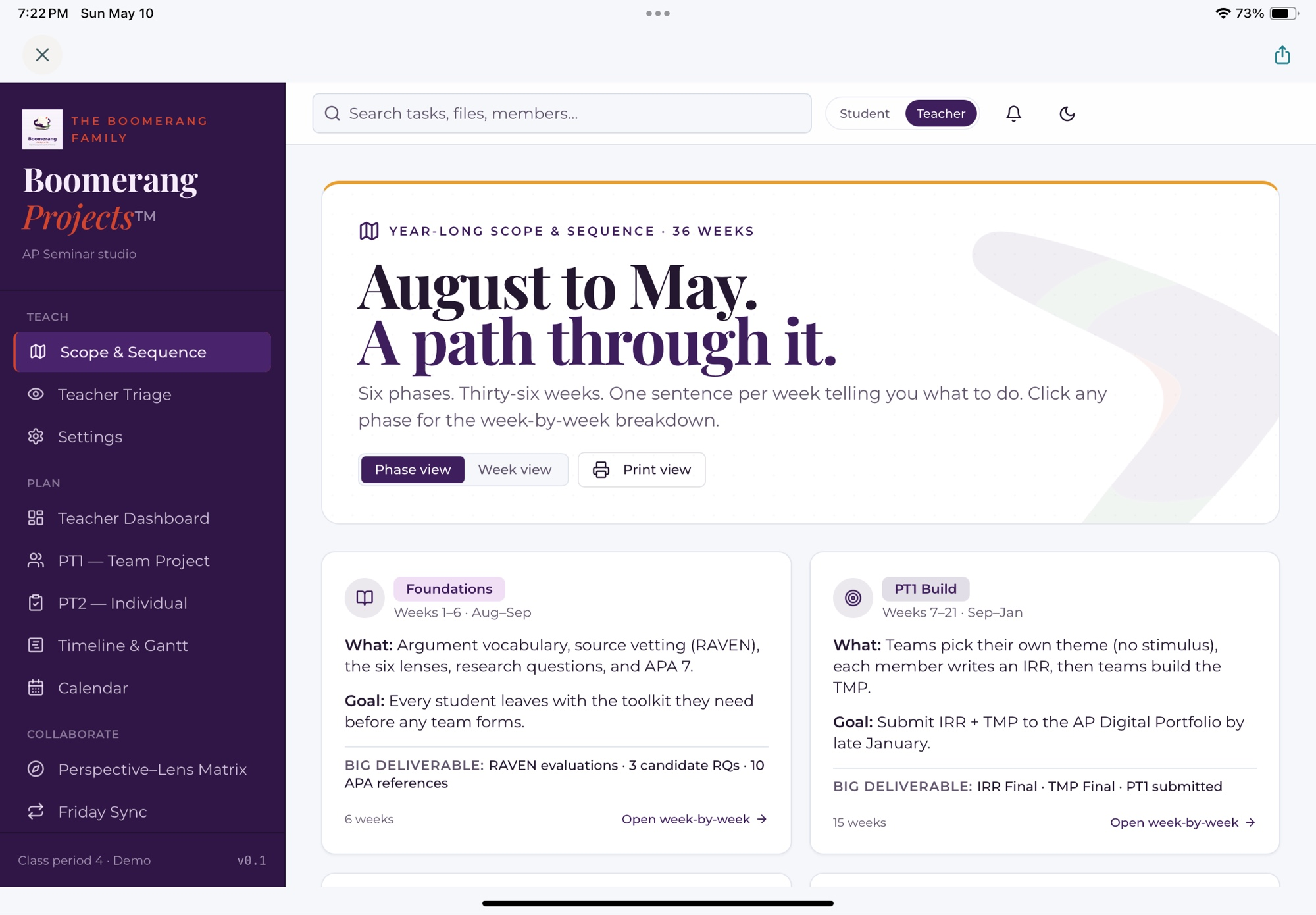
Teacher view · Year-long planning
Thirty-six weeks. Six phases. One sentence per week telling you what to do. Click any phase for the week-by-week breakdown, with deliverables tied to PT1 and PT2 milestones — and an Edit view so you can shift dates to your school calendar.
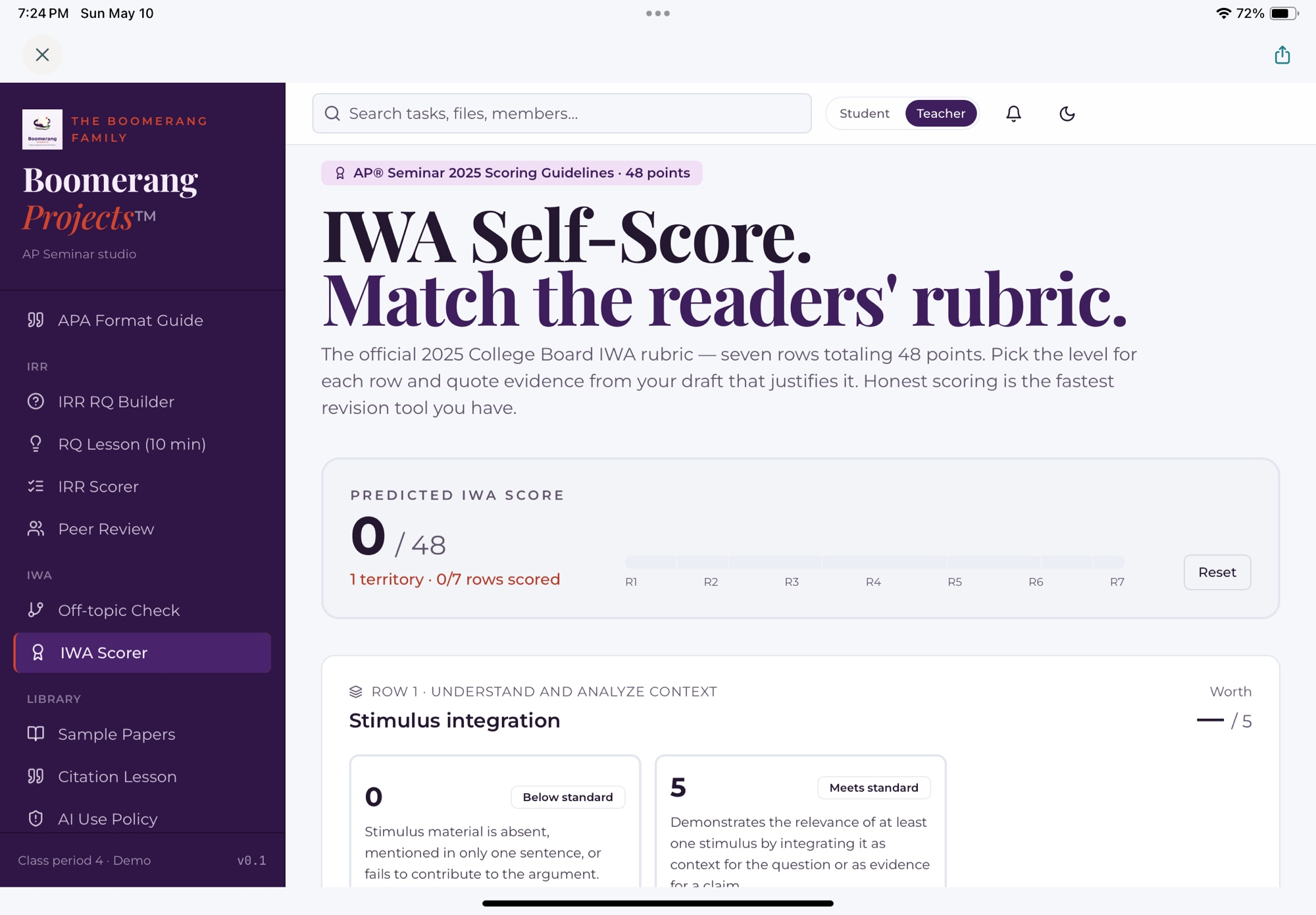
Student view · PT2 self-assessment
The official 2025 IWA rubric — seven rows, 48 points total — with a place to pick a level for each row and quote the evidence from your draft that justifies it. Honest self-scoring is the fastest revision tool a student has.
AP Seminar teaches students to look at their own research honestly — to name limitations, to consider implications, and to imagine what a better next version could be. Boomerang Projects is built the same way.
The v1 beta cohort is small on purpose. Beta partners get free access throughout the beta period and a direct line to the founder. The feedback we gather here is the rubric the next version is built against.
Join the beta“I built Boomerang Projects because the tools we put in classrooms should reflect the best of teaching — trust, judgment, and care. The freedom that makes AP Seminar work is worth protecting, and the structure that protects it is worth building well.”
— Drew Snow, Founder & CEO, Boomerang Projects™